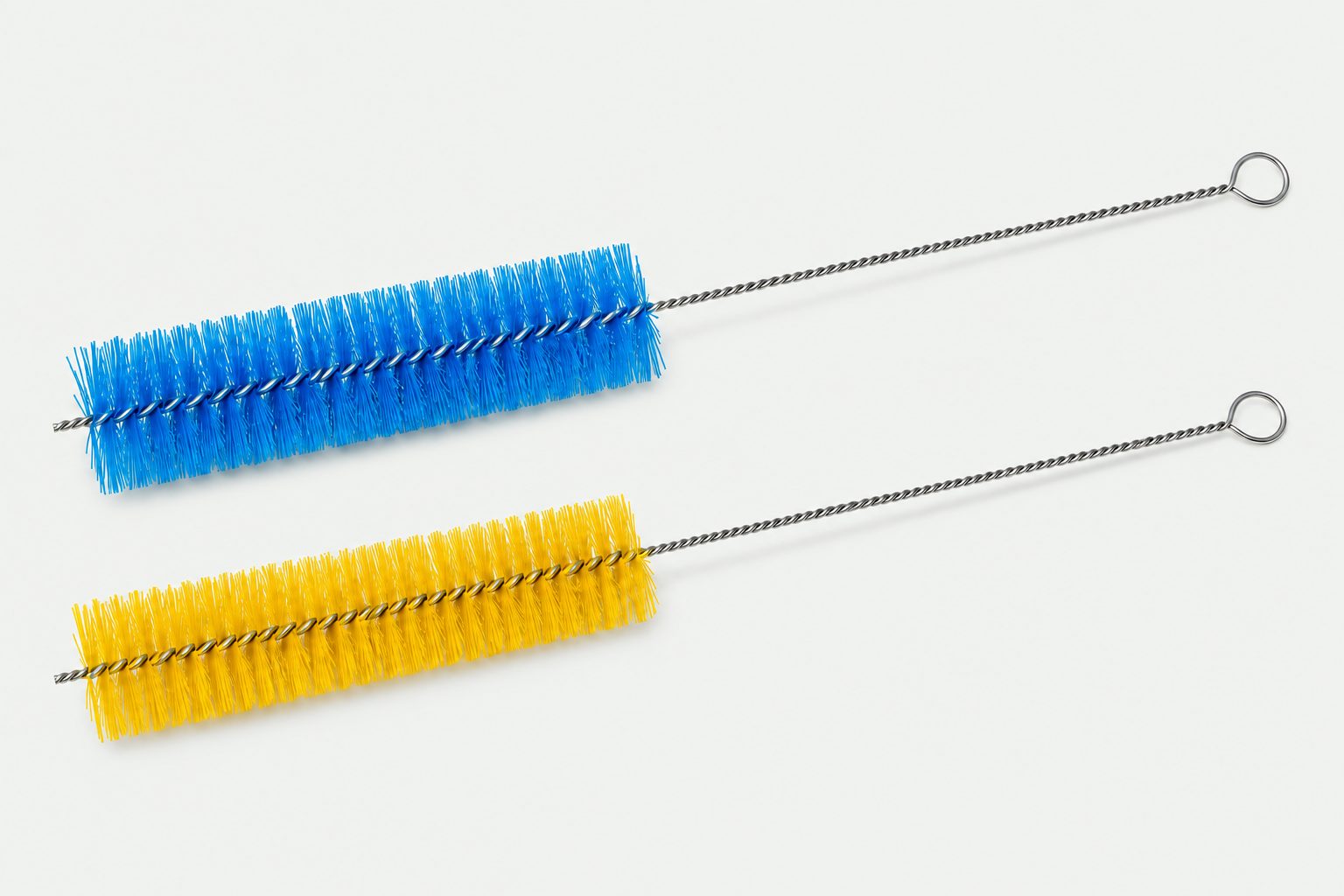
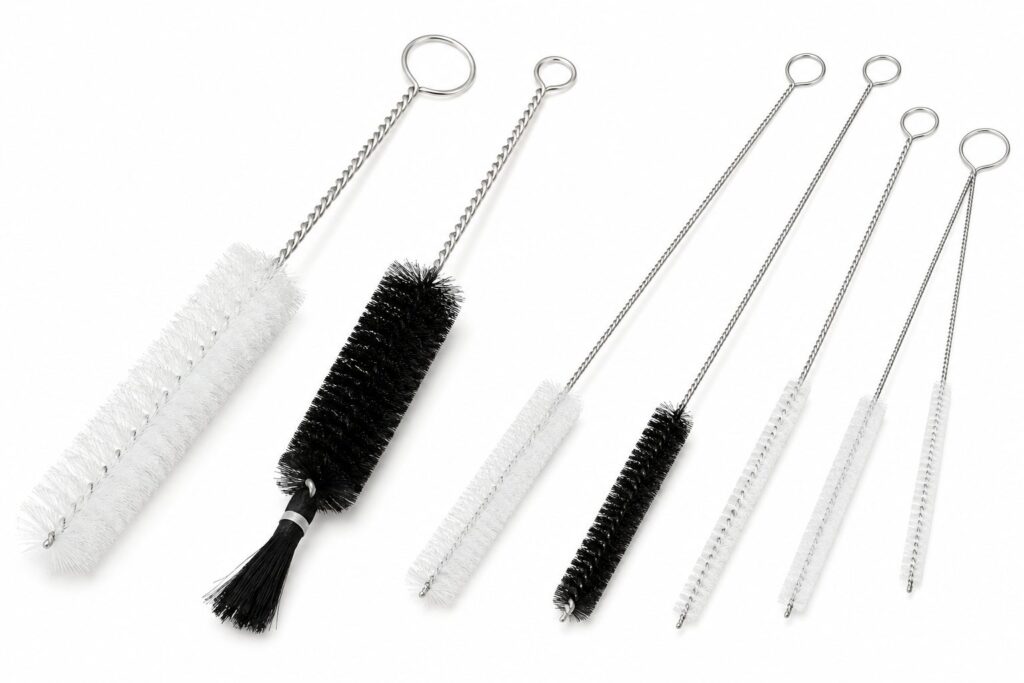
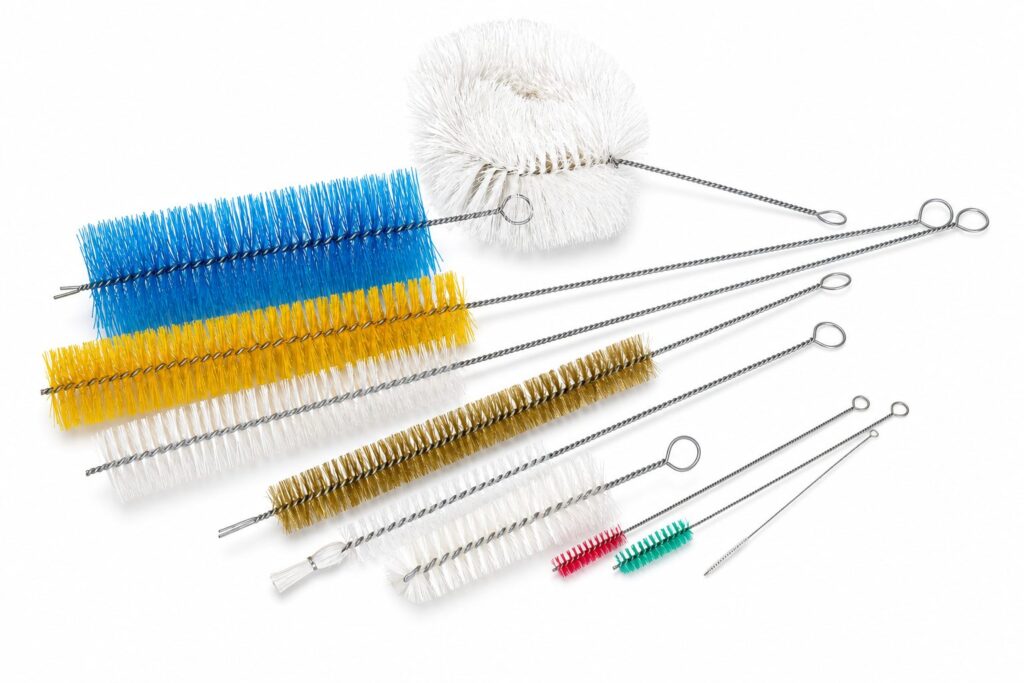
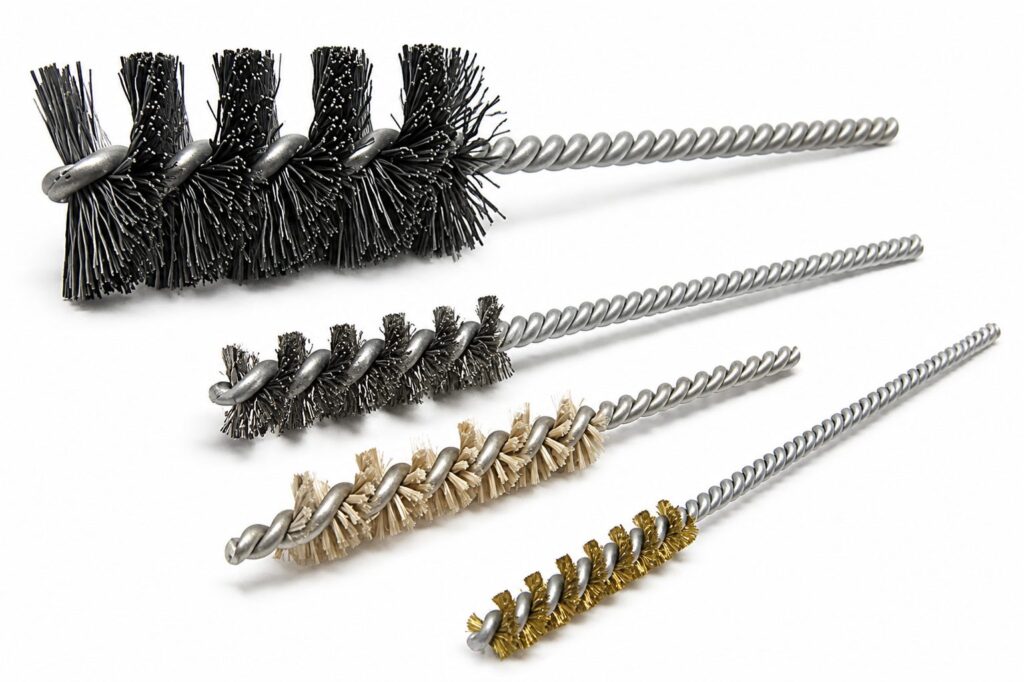
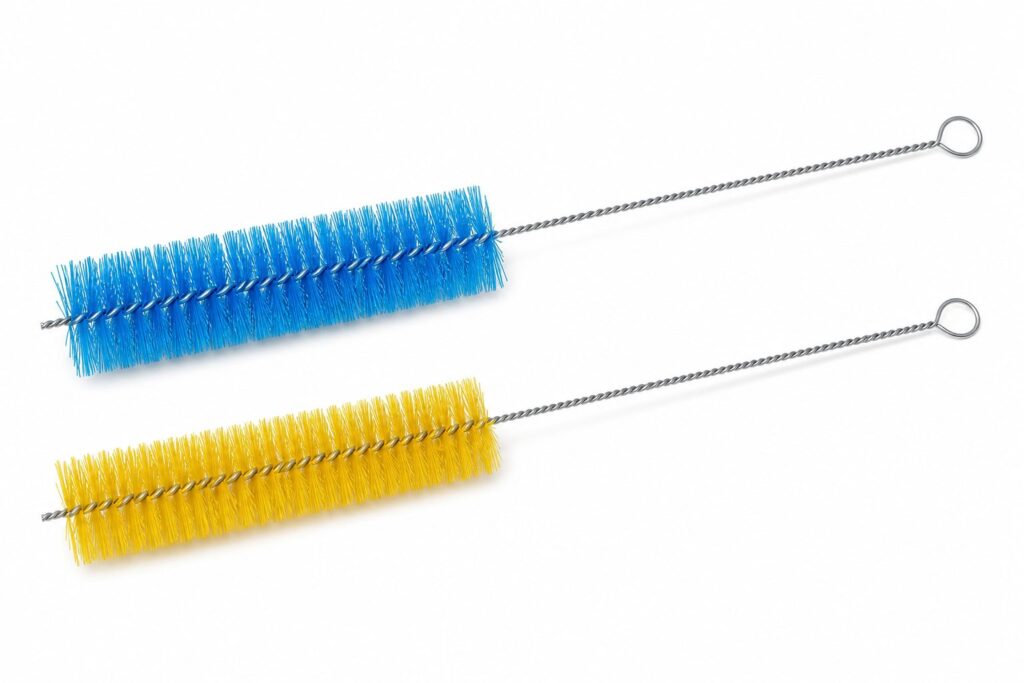
Twisted-in-wire brushes are commonly referred to as tube brushes, bottle brushes, pipe brushes, or internal cleaning brushes.
Twisted-in-wire brushes are made by placing bristle material between the wires and then twisting the wires tightly, which secures the bristle. Brushes are then trimmed to size.
We can manufacture these brushes with a male or female fitting, and we can also manufacture extensions to reach longer distances.
These brushes can be used by hand or for use in power drills, drill presses and CNC machines.
Uses:
Twisted wire, bottle, pipe or condenser tube brushes can be used for the following applications: applying, pushing, removing, cleaning, spreading, or deburring; cleaning holes both large and small.
These brushes can be manufactured with polypropylene, nylon, wire, brass and Tynex or carbide.
Applications:
Twisted wire, bottle, pipe or condenser tube brushes can be used for the following applications: applying, pushing, removing, cleaning, spreading, or deburring; cleaning holes both large and small.
How To Use:
These brushes can be used by hand or for use in power drills, drill presses and CNC machines.
Extras:
Available with male/female settings. Extensions can be made to reach further distances
Send the working width, outer diameter, bore or mounting detail, trim length, fill material, operating speed and a short description of the surface being brushed.
Made around the application
Standard dimensions are useful, but performance depends on contact pressure, fill density and how the brush moves through the job.
Typical specification points
Dimensions
Outer diameter, core diameter, bore, face width and trim length.
Fill material
Polypropylene, nylon, PET, abrasive nylon, stainless steel or brass.
Pattern and density
Straight, staggered or spiral fill selected around coverage and contact.
Twisted-in-Wire Brushes questions
Can you make a brush from a worn sample?
Yes. Send the old brush, a clear photograph or a drawing. We can work back to the core, bore, fill pattern and bristle specification.
What bristle materials do you work with?
Typical materials include polypropylene, nylon, polyethylene, PET, abrasive nylon, stainless steel and brass. The right choice depends on contact surface, temperature, chemicals and the required action.
How do I choose the fill pattern?
Straight, staggered and spiral patterns meet the work surface differently. We choose the pattern around coverage, contact pressure and how the brush rotates or travels.
How does trim length affect performance?
A shorter trim is stiffer and more aggressive. A longer trim flexes more and gives a sweeping action.