Product range

Rotary and Roller Brushes

Rotary brushes for cleaning, washing, polishing, guiding and processing. Made to standard dimensions or engineered around your machine.

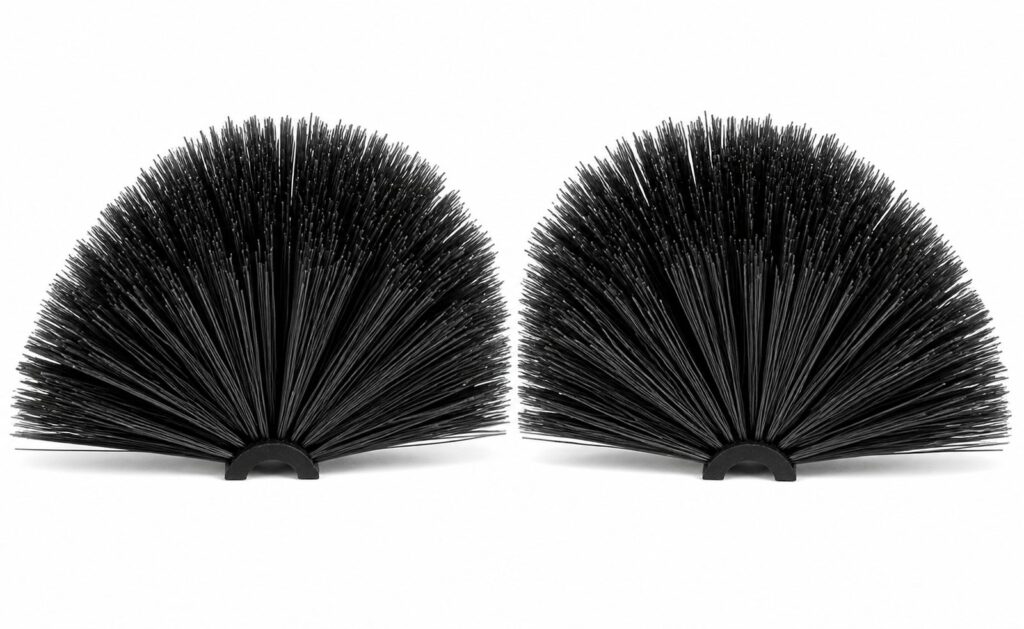
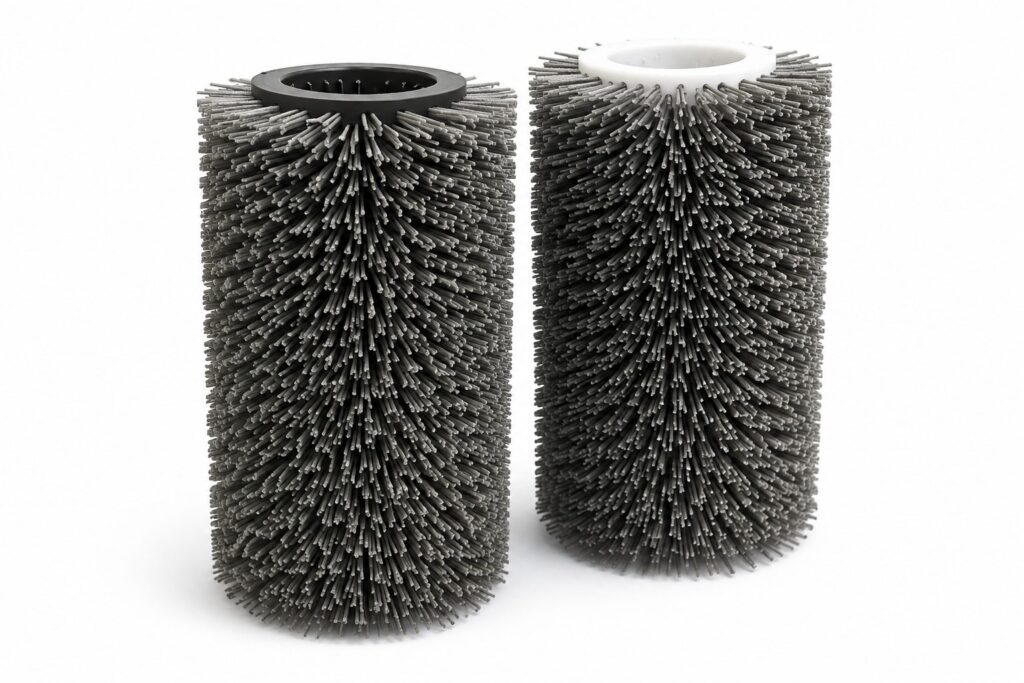
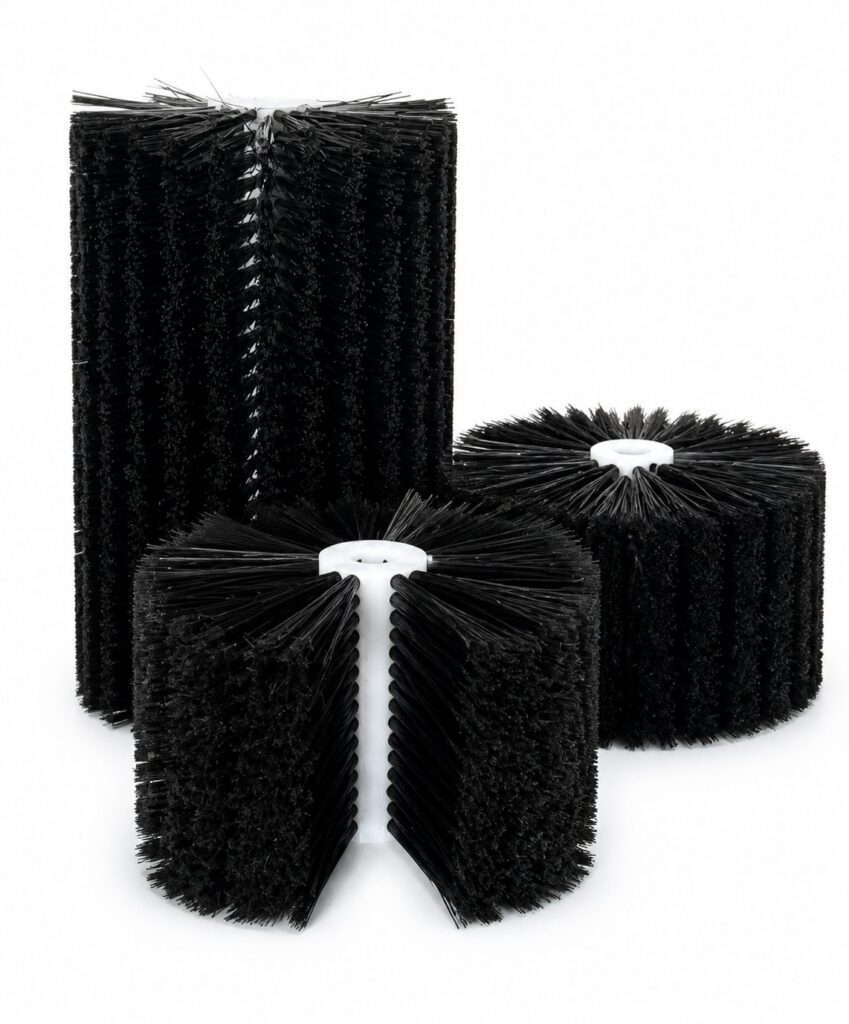
Rotary or roller brushes are manufactured by stapling knots of bristle into pre-drilled HDPE or nylon cores.

These brushes are extremely versatile:

  • Bristle Choice – there are numerous bristle options that can be used to fill these brushes; these include polypropylene, nylon, polyethylene, PET, Tynex, and stainless steel.
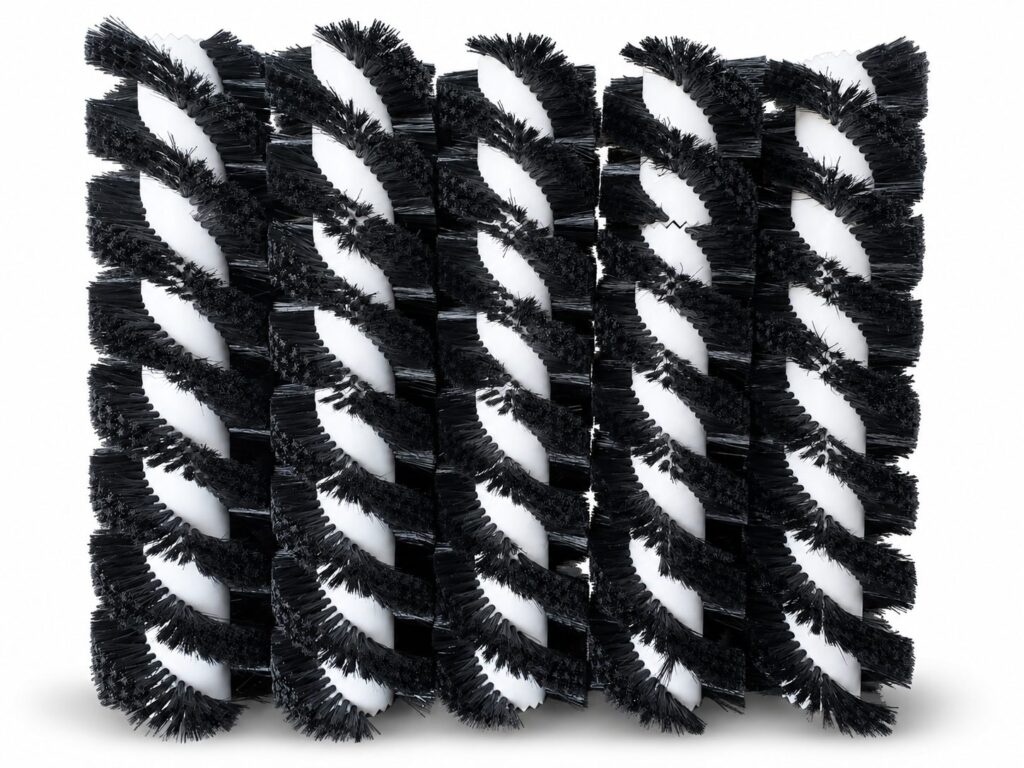
  • Pattern – brushes can be drilled with a staggered, spiral or straight pattern
  • Density – brushes can be very dense or less dense depending on the application. Brushes that are required to do lighter work generally have a more open pitch and brushes which are required to do heavier work have a more closed pitch to create a more dense brush.
  • Trim – the length of the bristle can be short or longer – the shorter the trim the more abrasive the brush and the brush can be used for brushing; a longer trim gives more of a sweeping effect.

USES OF ROTARY BRUSHES

Brushes or channels can be mounted to a machine/door/ gate or conveyor belt.

We manufacture these:

CLEAN & WIPE 
Brushes can be used to remove dirt, dust and residue from surfaces, including machines, conveyor belts and products. 

CONVEYOR BELT CLEANING
Brushes can be used to clean various types of conveyor belts from mining to food production. 

DEBURR SURFACES AND EDGES 
Brushes can be used to deburr surfaces and edges to ensure these are smooth and residue-free. 

DRY 
Brushes can be used to dry surfaces and products such as fruit

LABEL 
Brushes can be used to attach material like labels to products. 

LIQUID / CHEMICAL APPLICATION
Brushes can be used to apply liquids which include water, chemicals and wax to various products from wood to fruit and vegetables. 

LIVESTOCK WELLBEING 
Brushes can be used to improve the well-being of livestock – this includes horses and cows. 

PEEL
Brushes can be used to peel fruit and vegetables 

SEAL
Brushes can be used to close gaps, parts in machines, spaces between doors and areas 

SOLAR
Brushes can be used to clean solar panels to ensure optimal performance 

SWEEP
Brushes can be used to sweep various surfaces in various applications, from the cleaning of floors to  

WASH 
Brushes can be used to wash surfaces, from fruit and vegetables to machines. 

WOOD GROOVES 
Brushes can be used to create texture and fine grooves in wooden boards. 

Extras:

Pattern:  Brushes can be drilled with a staggered, spiral or straight pattern

Density:  Brushes can be very dense or less dense depending on the application. Brushes that are required to do lighter work generally have a more open pitch and brushes which are required to do heavier work have a more closed pitch to create a more dense brush.

Trim: The length of the bristle can be short or longer – the shorter the trim the more abrasive the brush and the brush can be used for brushing; a longer trim gives more of a sweeping effect.

Specifications:
Base: HDPE, Nylon or Wood

Bristle – Nylon, Polypropylene (PP), Carbide or Tynex, Brass, Stainless Steel

What we need to specify it

Send the working width, outer diameter, bore or mounting detail, trim length, fill material, operating speed and a short description of the surface being brushed.

Made around the application

Standard dimensions are useful, but performance depends on contact pressure, fill density and how the brush moves through the job.

Typical specification points

Dimensions

Outer diameter, core diameter, bore, face width and trim length.

Fill material

Polypropylene, nylon, PET, abrasive nylon, stainless steel or brass.

Pattern and density

Straight, staggered or spiral fill selected around coverage and contact.

Rotary and Roller Brushes questions

Can you make a brush from a worn sample?

Yes. Send the old brush, a clear photograph or a drawing. We can work back to the core, bore, fill pattern and bristle specification.

What bristle materials do you work with?

Typical materials include polypropylene, nylon, polyethylene, PET, abrasive nylon, stainless steel and brass. The right choice depends on contact surface, temperature, chemicals and the required action.

How do I choose the fill pattern?

Straight, staggered and spiral patterns meet the work surface differently. We choose the pattern around coverage, contact pressure and how the brush rotates or travels.

How does trim length affect performance?

A shorter trim is stiffer and more aggressive. A longer trim flexes more and gives a sweeping action.