Product range
Brushes for washing, drying, polishing and transferring fruit and vegetables through packhouse lines.
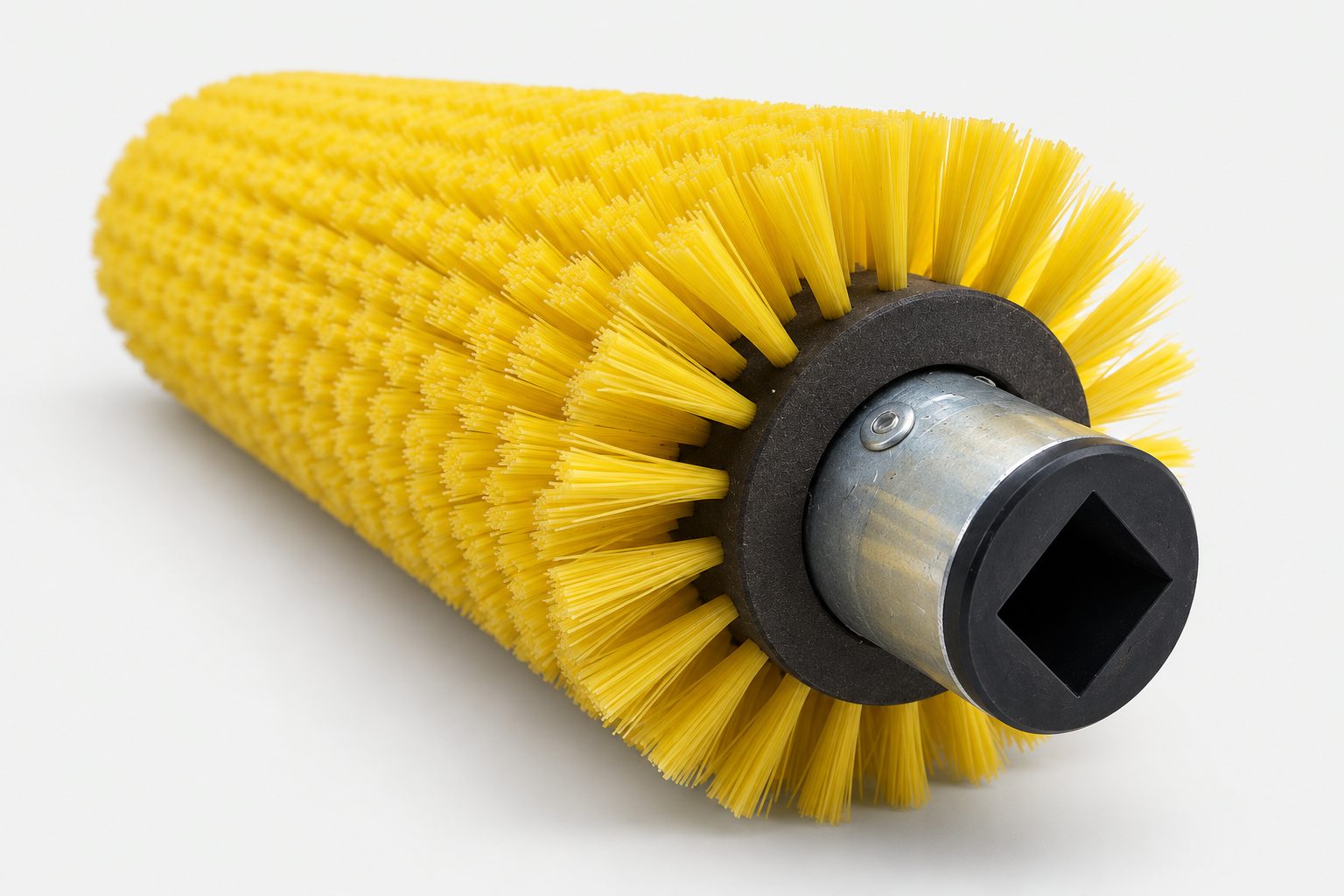
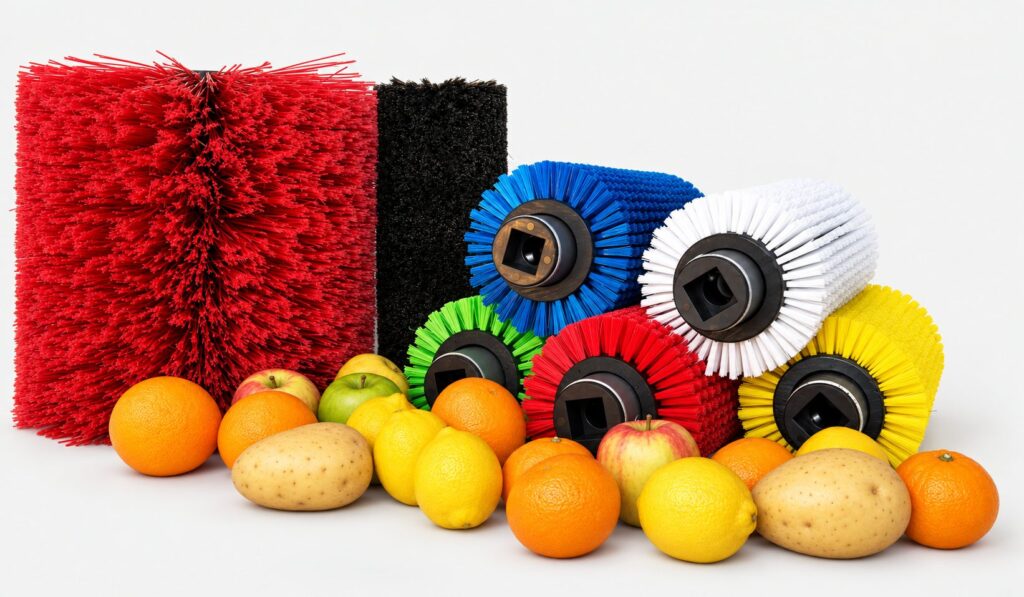
John Gray & Son manufactures a wide range of brushes that can be used in the agricultural industry. From washing to drying to waxing to transferring fruit and vegetables, John Gray has the solution.
Our brushes have been for the following: citrus, apples, mangoes, watermelon, melon, butternut, pumpkins, cucumbers, tomatoes, avocados and potatoes.
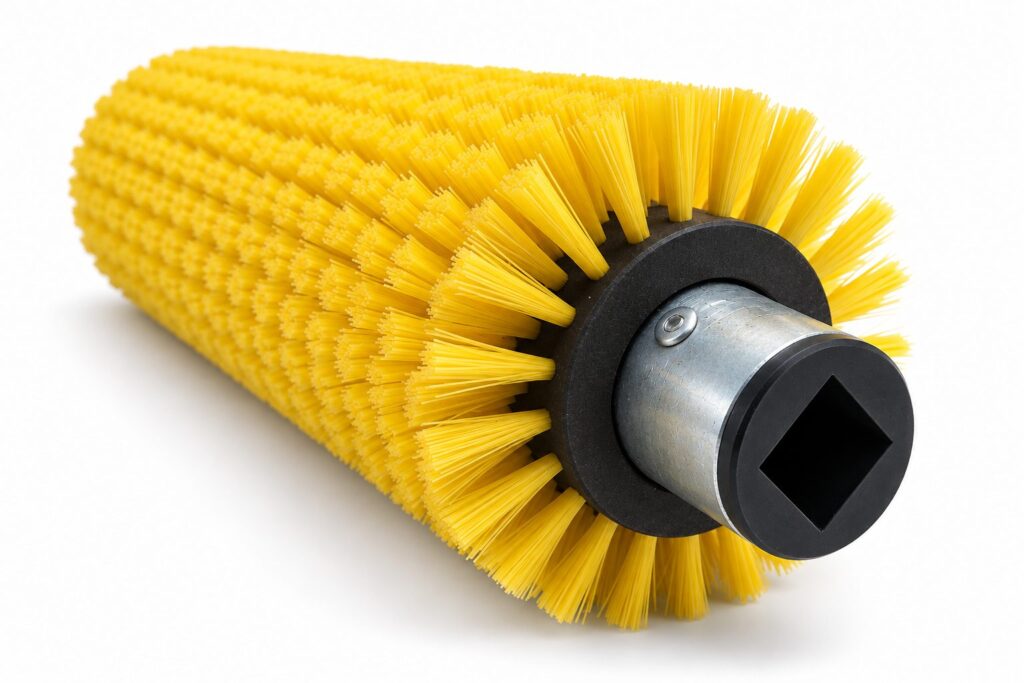
John Gray offers a punched brush. We have designed an interlocking brush system for the agricultural industry.
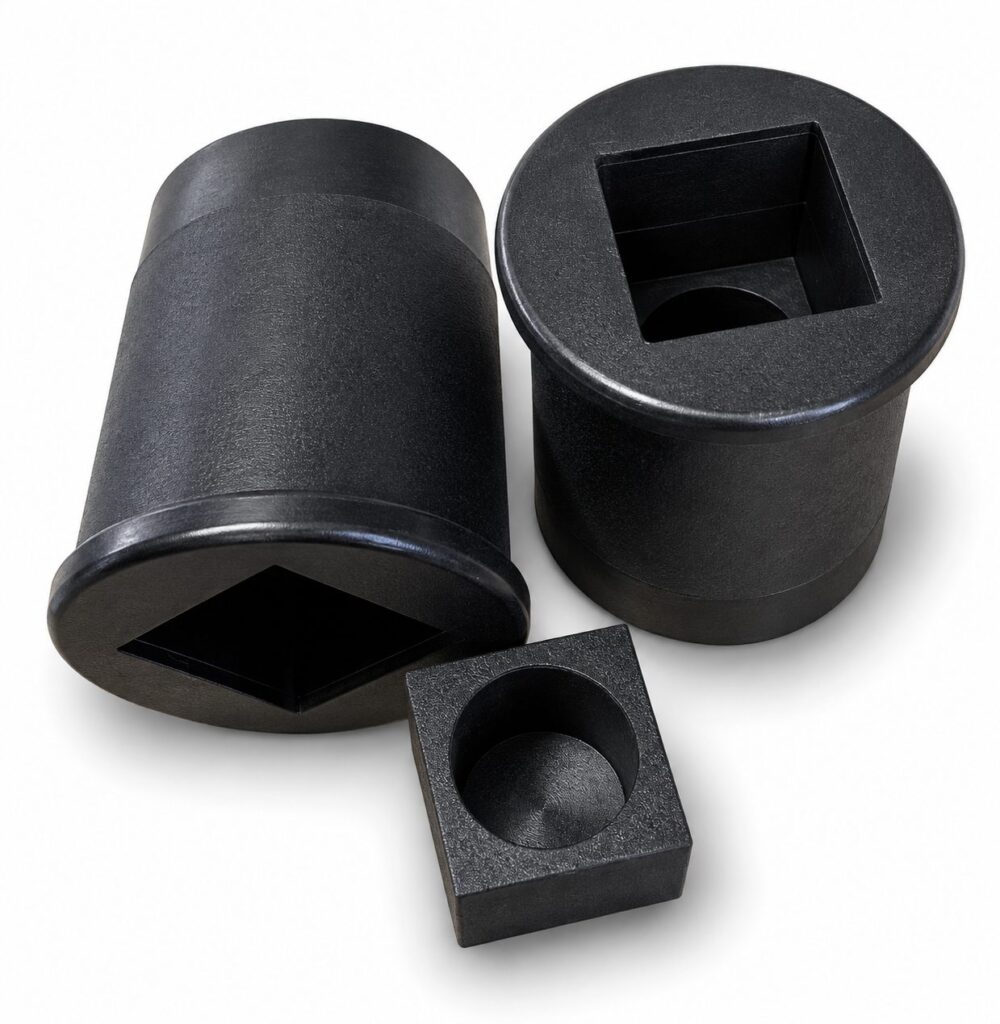
Each brush has a male and female fitting that allows you to assemble the brushes on a shaft. Only the brushes on each end need to be secured with a pop rivet or bolt.
Advantages of this system
Application:
Washing fruit and vegetables before fungicide or wax treatment is standard practice in a packhouse, as it removes fungal spores and bacteria and keeps the packline and equipment clean.
Specifications:
Core: Glass filled HDPE
Bristle: Nylon, Polypropylene (PP), PET
Shaft: Aluminium or Stainless Steel
Corrugation: Yes
Available individually or made to specification for your shaft.
Application:
Waxing brushes are used to apply wax to fruit. Brushes are available with the following bristles:
Specifications:
Core: Glass-filled HDPE
Bristle: Polypropylene (PP), Polyethylene (also known as Mylex)
Shaft: Aluminium or Stainless Steel
Corrugation: Yes
Extras:
Bushes
Glass filled bushes with an option square drive.
Application:
Transfer brushes are used in the selection process that sorts fruit according to certain specifications. They also assist in the movement of fruit along the pack line.
We manufacture to your OD (outer diameter) and ID (inner diameter) of your shaft.
Specifications:
Core: HDPE
Bristle: Polyethylene (also known as Mylex)
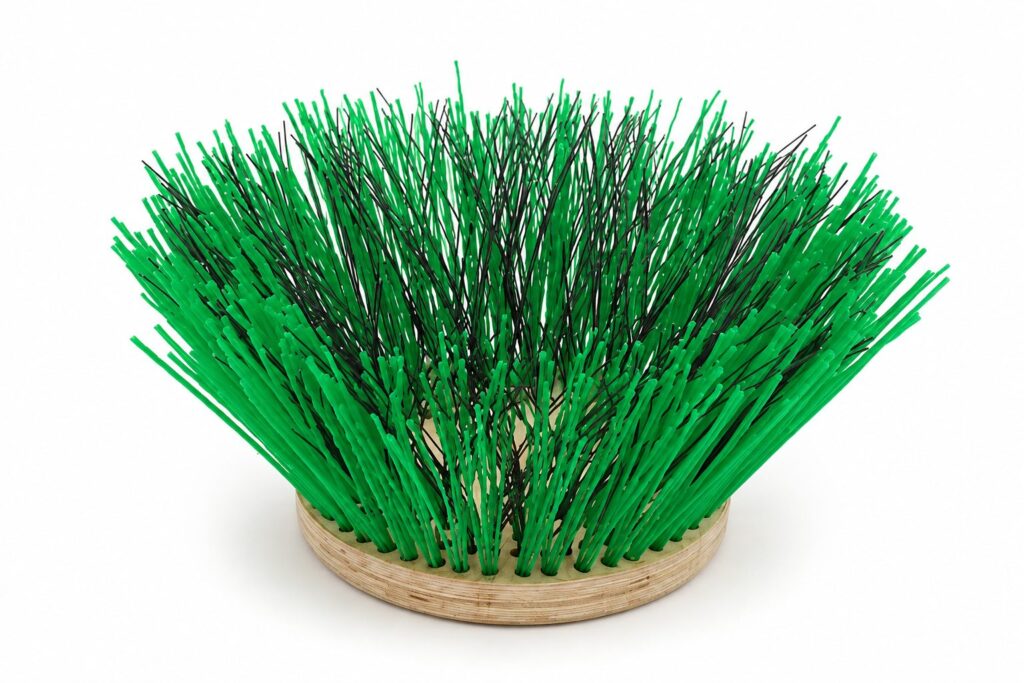
Flagging: Bristle can be flagged. This means splitting the ends of the bristle so that it softens the bristle.
Application:
Strip brushes are versatile and have a number of applications: sealing, conveyor cleaning, surface cleaning, surface roughening, dusting, product separation or transfer, tensioning devices, static dissipation, external or internal pipe cleaning, filter or screen cleaning, glass washing or fruit or vegetable washing.
Specifications:
Base: HDPE, Nylon or Wood
Bristle: Nylon, Polypropylene (PP), Carbide or Tynex, Brass
Yes. Send the old brush, a clear photograph or a drawing. We can work back to the core, bore, fill pattern and bristle specification.
Typical materials include polypropylene, nylon, polyethylene, PET, abrasive nylon, stainless steel and brass. The right choice depends on contact surface, temperature, chemicals and the required action.
Straight, staggered and spiral patterns meet the work surface differently. We choose the pattern around coverage, contact pressure and how the brush rotates or travels.
A shorter trim is stiffer and more aggressive. A longer trim flexes more and gives a sweeping action.